Posts

Poems of Swappnam

Last post of mine was on the music of 'Swapnam'. The tunes have been set to Shaivite poetry. I collect the poems here for your quick reference. I give the English where available and Tamizh version when English version is not available. 1. 'Kozhi Silamba': திருஎம்பாவை கோழி சிலம்பச் சிலம்பும் குருகெங்கும் ஏழில் இயம்ப இயம்பும்வெண் சங்கெங்கும் கேழில் பரஞ்சோதி கேழில் பரங்கருணை கேழில் விழுப்பொருள்கள் பாடினோம் கேட்டிலையோ வாழியீ தென்ன உறக்கமோ வாய்திறவாய் ஆழியான் அன்புடைமை ஆமாறும் இவ்வாறோ ஊழி முதல்வனாய் நின்ற ஒருவனை ஏழைபங் காளனையே பாடேலோர் எம்பாவாய். பதப்பொருள் : கோழி சிலம்ப - கோழி கூவ, எங்கும் குருகு சிலம்பும் - எவ்விடத்தும் மற்றைய பறவைகள் ஓசையை எழுப்பும்; ஏழில் இயம்ப - வாத்தியங்கள் ஏழிசை முறையில் இசைக்க, எங்கும் வெண்சங்கு இயம்பும் - எவ்விடத்தும் வெண்மையான சங்கமானது முழங்கும்; கேழ்இல் பரஞ்சோதி - ஒப்பற்ற மேலான ஒளிப்பிழம்பானவனும், கேழ்இல் பரங்கருணை - ஒப்பற்ற மேலான கருணையுடையவனுமான சிவபெருமானது, கேழ் இல் விழுப் பொருள்கள் - நிகரில்லாத உயர்ந்த புகழ்களை, பா...
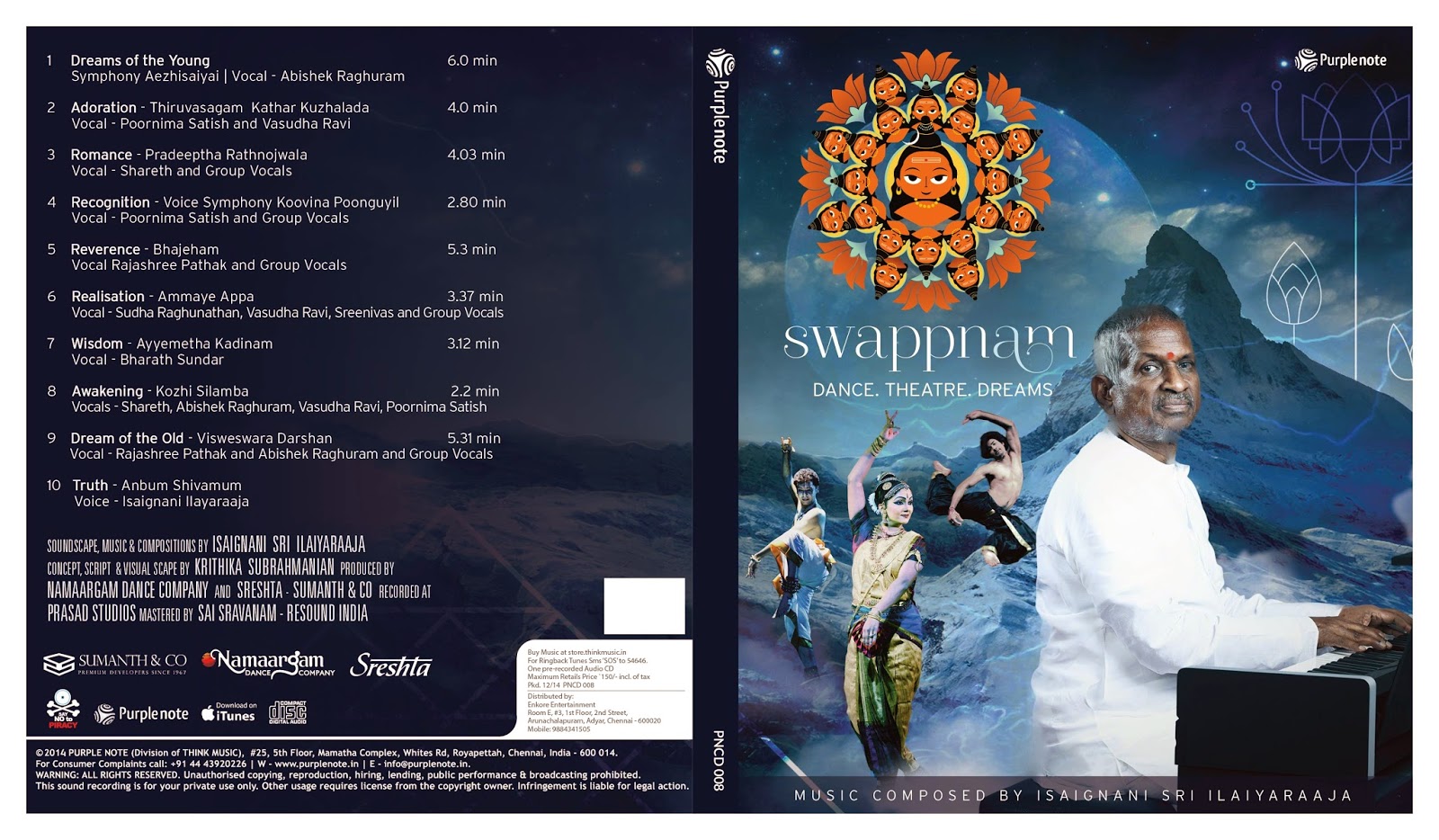
Swappnam: Music for your dreams

Image
Illayaraja has composed for a dance ballet for the first time. Hence there was an excitement amongst fans about this album. Let us look at how the album shapes up. First I will write about each piece and in the end give my opinion on what Raja tried doing in this album. Dreams of the Young (Ezhisaiyai) - Abhishek Raghuram : For some reason all songs are given an English title. The song which opens the album is Ezhisaiyai. The opening though has a swell of violins in the western classical mode and other instruments join in to provide the harmony. Slowly the main violin starts playing strains of Kambhoji. Not the strong Carnatic variety, which would come later, but a more flatter Kambhoji. Towards the end of the symphonic music, you start hearing Kambhoji clearly, atleast clear enough to know that Kambhoji would follow. The violinist does a great job. Abhishek Raghuram is in familiar territory. It is Kambhoji of the concert variety that he starts singing, with the veena and ven...

Drama in Cinema

Image
Recently as I was switching channels I chanced upon a song from the recent Tamil film, 'Kaviya Thalaivan'. The background for the story is supposed to be a drama troupe of the 1930s or 1940s in Tamilnadu. I haven't seen the movie so I cannot comment on how the movie dealt with this but the song was very disappointing. As a standalone tune the song is not bad but the overall effect was quite bad. No one seems to have taken any pains to recreate that era. The director, the art director, the music director: No one seems to have put in effort to give an authentic feel. Instead the dance seemed like a pale imitation of a Broadway musical rather than a song from the 1930s drama. This song and the movie reminded me of a few Indian films in which are set in the world of theater. I could immediately think of three such films (I know there are many more). I will write briefly about them. The first film I will take up is not strictly about theater. It is about a dancing troup...

Down Memory Lane: G N Joshi

Image
Have you heard the ‘Marwa’ of Ustad Amir Khan,  ‘Om Tat Sat’ of Bade Ghulam Ali Khan, raag Shri of D.V. Paluskar and ‘Chandranandan’ of Ustad Ali Akbar Khan? If you have enjoyed these masterpieces, you need to thank a person called G.N.Joshi, who, as a recording executive of HMV, brought to us these everlasting treasures. G.N. Joshi wrote a book called ‘Down Melody Lane’ in which he details his interaction with legendary and not to so legendary musicians and his trials and tribulations to get recording done by these artists. In modern times, where the artists understand the need for publicity, getting them to record is not an issue. We are talking a different era here, an era where many musicians weren’t too keen to record. Many felt they were doing a favor to the company by recording their music. They did not understand the potential of the EP/LP records for being good publicity material. The also did not realize that these records would become archival material inspir...

M.S.Subbulakshmi : Three (not often heard) Classics

Image
Yesterday was M S Amma's 98th Birth Anniversary. I had tweeted three krithis, one each of the trinity, yesterday in her remembrance. I thought I will now write a few words on each of these krithis and out it up on my blog. As with any other singer, MS is also identified by a set of songs: Sriman Narayana, Sarojadalanetri, Akilandeswari, Kamakoti Peetasthithe, Maitrim Bhajatha (and many more) and rightly so for she owned these songs. (OK 'kuraionrum illa' also. So don't kill me now). Yet there were masterpieces which she sang as well as any other master. Unfortunately these have not been heard often enough. I want to bring to your notice three such masterpieces. Hopefully these will find their place in your MS playlist soon. We start with a charming Dikshitar krithi in the rare ragam, Madhava Manohari. I heard this krithi first in the voice of D K Pattammal. Her version is a tad faster, surprising given that DKP is known for her slow speed renditions. There is a ...

Bapu: The man inspired by Sita

Image
Bapu, the famous director and artist, passed away last month. Bapu was one of those directors whose sensibilities when it came to music and lyrics was highly refined. Many of the songs from his movies are now part of the Telugu film music canon. The canonical nature of the songs owe a lot to Bapu. Like K.Vishwanath, he gave equal importance to language, tradition and music in his films. Like K.Vishwanth, he too used K V Mahadevan as the music director for most of his movies. Bapu and K Viswanath's aesthetic senses was very similar in that they had great respect for tradition and were to a large extent idealists and moralists. The only difference between them as film makers is that K.Vishwanth had a central theme which ran across almost all his movie, that of middle class and art. Bapu on the other hand made a variety of movies ranging from mythological, historical all the way to revolutionary films. Having said that, if we have to look for a central theme in Bapu's movie...

Ragamalikas in Film Music - Part 3

Image
When I published the Part - 2 of this series, my friend and humorist K. Balakumar (@kbalakumar) asked me as to what happened to the ragamalika, 'Oru Naal Padhumaa'? I am sure many would ask that question as it is one of the very famous ragamalikas in Tamil Film Music history. The simple reason as to why that song didn't appear till now is because I have kept it for the third part of this series. In this I will deal with ragamalikas which are sung in some sort of competition and with ragamalikas used in dance sequences. Not only is 'Oru Naal Podhuma?' famous as a song but that whole segment in the movie 'Tiruvilayadal' culminating in 'Paatum Naane' via 'Isai Thamizh Nee Seidha Arum Sadhanai' is cult and has many followers. There are multiple reasons why 'Oru Naal Podhuma?' is remembered to this day: Mahadevan's superb tuning, Kannadasan's clever lyrics, Balamurali's effortless singing and above all Balaiah's out...