Posts

Showing posts with the label syama sastry

M S Subbulakshmi and her music - Part 12: Expanding the repertoire of Carnatic Music - Part 2

Image
After I posted the first part of Part 12, a good friend pointed out that when talking MS and Annamacharya krithis, we cannot miss out on 'Dolayam' and 'Ksheerabdhi Kanyakaku.' It is very true, because MS has made these krithis as standards with her amazing renditions.  Here is MS singing 'dolayalam', a Khamas-based Annamayya krithi. Hear the amazing precision and the sense of layam in the krithi. It charms you immediately. Let's now hear, 'ksherabdhi kanyakaku', a Kurunji raga krithi of Annamacharya. Again, a song that gains so much from MS's voice texture, vocal dynamics and the deep-rooted bhakthi that she conveys.  When the Venkateshwara Suprabhatam LP was released, it was an instant hit, and even to date, it is played in homes and temples all across India. What is more relevant to this article is the B side of this LP, which contained two krithis that also became extremely popular due to MS singing those krithis. The first of them was the Swa...

M S Subbulakshmi and her music - Part 11: Neraval - Various

Image
I n this part, I will point you to some of MS's iconic neravals, which I am sure you will all enjoy. All the attributes I had mentioned in the earlier parts of this series about MS's neraval are present in each of these. The breath control, vocal consistency across the range, vocal dynamics, creating tension and resolving it, clear enunciation of words, gripping phrasing and above all, the bhathi bava that she injects into each one of these neravals. 1. We start with the most famous of MS's neravals. 'sama gana vinodhini', the charanam of 'Sarojadala Netri,' the Syama Sastry krithi in Shankarabaranam raga. The kriti rendition, featuring neraval and tani, took the roof down during her UN Concert.  (This link starts from the neraval. To hear the whole ragam and krithi, search for Part 1.) Her voice is in great form, and she effortlessly traverses the higher reaches.  The neraval has left such an indelible mark on the psyche of listeners that few artists take o...

M S Subbulakshmi and her music - Part 8 - Syama Sastry : Mayamma & Kanakasaila viharini

Image
  In this post, I will take up two Syama Sastry krithis sung by MS Subbulakshmi.  The greatness of Syama Sastry (as well as his two contemporaries) is that he could take up what many consider a 'minor' raga and compose a krithi of great seriousness and grandeur in that raga. For example, Ahiri is considered to be a 'minor' raga, in the sense that it does not give much scope of kalpana of an artist and has limited prayogas. Yet, Syama Sastry created a gem of a krithi in this raga, 'mayamma,' which has gravitas and oozes karuna rasa. (Dikshitar too took up this raga and created a mammoth Kamalamba krithi, while Tyagaraja created the brilliant 'adaya sri.') Similarly, Syama Sastry took up another raga with limited scope, Punnagavarali, and created a 'heavy' krithi, 'kanaka saila viharini'. We will now hear both these krithis in the voice of MS. First, the Ahiri krithi, 'mayamma.' In this recording you get MS singing a slokam from Mee...

M S Subbulakshmi and her music - Part 7: Syama Sastry - Rave Himagiri Kumari

Image
  We have heard MS sing the Tyagaraja and Dikshitar classics in this series's earlier part. In this part, we will look at MS singing Syama Sastry. Many Tyagaraja krithis are redolent with high poetry, while Dikshitar krithis are embedded with deep Sanskrit scholarship and sthala puranas. Syama Sastry's krithis, on the other hand, are simple and direct pleas to the Goddess. Syama Sastry rejects exalted language in favour of simple words. His krithis oftentimes have the feeling of prose rather than poetry. Despite the simple and sometimes simplistic lyrics, the combination of music and lyrics makes his krithis emotionally heavy, and only the best artists can do justice to his compositions. While he was known for his superb use of the chapu thala, what stands out is the merging of the thala with the bhakti bhava, which provides an unforgettable experience to the listener.  Even when he takes up a 'minor' raga like Ahiri or Paras, he fills them up with so much raga bhava an...

Ahiri: Raga that defines karunyam

Image
As I was writing the Punnagavarali post, I was very sure that I will have to immediately write about another similar raga, Ahiri. It is not that you cannot distinguish between Punnagavarali and Ahiri. Both have their unique identities but in many other facets, they are very similar to each other. Both Punnagavarali and Ahiri are janya ragas of the mighty Todi. Both are ‘karuna rasa pradhanam’ ragas. Both are supposed to be ragas with limited scope. Both of them are vintage ragas having been with us for ages. Both are very carnatic in nature, in the sense you don’t find them outside of Carnatic music. (S R Janakiraman in one lec-dem says, “Ragas of the type of Ahiri are the pride and glory of Carnatic music”.) Both have been treated in a similar way by the trinity. Both have interesting associations linked to them. If it was the linkage of snakes and magudi to Punnagavarali is interesting, the Ahiri linkage is even more interesting. It is said that if you sing Ahiri, you w...

Raga that charms the snakes

Image
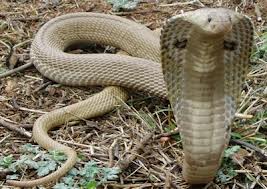
I don’t need to tell you that I am going to speak about Punnagavarali do I? Even young kids in South India associate this raga with snakes and snake charmers. I don’t know how this association happened or when it happened but it is now a well-entrenched association. Even if the person listening to this raga doesn’t know the name of the raga, he / she will immediately exclaim, “Isn’t this the same raga as played for magudi?” Punnagavarali is an easily identifiable raga. Maybe it is this association with snakes and snake charmers that have pushed Punnagavarali to the later part of the concert and the raga is generally regarded to be a ‘minor’ raga, used more in ragamalikas. This is not a true reflection on the scope and depth of the raga. Our musical trinity demonstrated the depth, grandeur and the variety this raga provides through their krithis. Let me talk about that now. Muthuswami Dikshitar is like a strict college professor, a great scholar, who has indepth knowledge of...