Posts

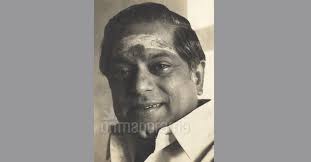
S R Janakiraman - The Dakshinamurthy to those who desired

Image
The Tamil word 'vallal' is difficult to translate into English, though Google Translate tells us its equivalent is 'philanthropist'. Yet, it doesn't capture all the cultural history and nuance associated with that word in Tamil literature. Vallal is almost a state of being, a part of the person, where philanthropy is not done as today's millionaires. Instead, it is the nature of that person described as vallal. Which means that a vallal need not be rich in the traditional sense but rather rich in his heart. S R Janakiraman, who passed away on 4th September 2026, a doyen in the Carnatic field, was one such vallal. For he gave his knowledge freely to everyone, and he never kept anything hidden for a rainy day. For him, dispensing knowledge meant the grains in his granary grew rather than diminished. He gave so much that anyone could be his disciple. He was like Guru Dakshinamurthy if you were ready to be his disciple.  Unfortunately, given my total lack of swara s...

M S Subbulakshmi and her music - Part 13: Master of post tani pieces (Thukkadas) - Part 1

Image
Thukkadas or post-tani pieces have their own fan base, and everyone from the past masters to the popular stars of today have their fans eating out of their hands for certain favourite pieces. Whether it be 'vellai tamarai' and the English Note of Madurai Mani Iyer, 'radha sametha krishna' of GNB, the slokhas and 'sapasyat kausalya' of Semmangudi, 'saranagan marugava' and 'srichakra raja simhasaneshwari' of Santhanam, all the way till the abangs of Ranjani-Gayathri and 'thunbam nergaiyil' of Sanjay Subramaniam, concert goers have enjoyed these pieces and associate them with the appropriate artist. While each of them had their own popular set of thukkadas, MS probably had the maximum number of post-tani pieces that were eagerly awaited by the audience. She was the undisputed Queen of the thukkadas. MS's thukkadas were soaked in bhakthi, and many of these pieces impacted people, not just due to the music, but because MS's personality...

M S Subbulakshmi and her music - Part 12: Expanding the repertoire of Carnatic Music - Part 2

Image
After I posted the first part of Part 12, a good friend pointed out that when talking MS and Annamacharya krithis, we cannot miss out on 'Dolayam' and 'Ksheerabdhi Kanyakaku.' It is very true, because MS has made these krithis as standards with her amazing renditions.  Here is MS singing 'dolayalam', a Khamas-based Annamayya krithi. Hear the amazing precision and the sense of layam in the krithi. It charms you immediately. Let's now hear, 'ksherabdhi kanyakaku', a Kurunji raga krithi of Annamacharya. Again, a song that gains so much from MS's voice texture, vocal dynamics and the deep-rooted bhakthi that she conveys.  When the Venkateshwara Suprabhatam LP was released, it was an instant hit, and even to date, it is played in homes and temples all across India. What is more relevant to this article is the B side of this LP, which contained two krithis that also became extremely popular due to MS singing those krithis. The first of them was the Swa...

M S Subbulakshmi and her music - Part 12: Expanding the repertoire of Carnatic Music - Part 1

Image
The music repertoire of any form of music expands due to the artists performing the music, and Carnatic music is no exception. From a time when the overall number of krithis performed was limited, to an era of abundance has been made possible due to a lot of musicians learning and singing newer krithis. Many stalwarts had left behind their signature on certain krithis, and those had captivated the audience. Be it Ariyakudi's 'evarimata,' Madurai Mani Iyer's, 'thaye yashoda,' GNB's 'sivakameshwarim,' DKP's 'dasukovalena,' Semmangudi's Bhairavi Swarajathi and so on. Of all of them, MS left behind the most beloved classics, which singers still continue singing, and everyone is reminded of MS's rendition. I am not talking here about the 'tukkada' pieces at the end of the concert, but those that are sung in the core of the concert. We have seen many such krithis in the earlier parts, like 'kanakasaila viharani,' 'pa...

M S Subbulakshmi and her music - Part 11: Neraval - Various

Image
I n this part, I will point you to some of MS's iconic neravals, which I am sure you will all enjoy. All the attributes I had mentioned in the earlier parts of this series about MS's neraval are present in each of these. The breath control, vocal consistency across the range, vocal dynamics, creating tension and resolving it, clear enunciation of words, gripping phrasing and above all, the bhathi bava that she injects into each one of these neravals. 1. We start with the most famous of MS's neravals. 'sama gana vinodhini', the charanam of 'Sarojadala Netri,' the Syama Sastry krithi in Shankarabaranam raga. The kriti rendition, featuring neraval and tani, took the roof down during her UN Concert.  (This link starts from the neraval. To hear the whole ragam and krithi, search for Part 1.) Her voice is in great form, and she effortlessly traverses the higher reaches.  The neraval has left such an indelible mark on the psyche of listeners that few artists take o...

M S Subbulakshmi and her music - Part 10: Neraval - Kamakoti Peetasthite

Image
  We will continue on MS's amazing neravals. Today, we take the Saveri krithi of Mysore Sadasiva Rao, 'sree kamakoti peetasthithe.' MS takes up the line, 'kadamba vana nilaye, amba, kanjalochane bhavani.' Initially, she repeats the lines a few times before launching into the neraval. The very start of the neraval is captivating, with MS stretching some syllables, shortening some, and of course, the emotion she puts on the word, 'amba.' The gradual exploration of the raga in the higher reaches heightens the bhava aspect without falling into sentimentality. As a friend of mine remarked, "Her voice has a divine resonance," which is clearly seen in this neraval. Even though the neraval is not as long as you would hear in concerts, it is amazingly effective. This is because MS brings into play all her skills while singing neravals: brilliant tone of the voice, ability of her voice to reach for the skies, her skill at creating tension, sustaining and the...

M S Subbulakshmi and her music - Part 9: Neraval - Paratpara

Image
In this part of the series, we will examine a main aspect of MS's singing: her brilliant neravals. I have always enjoyed MS's neravals more than any other artists for the following reasons: her ability to create great tension, unparalleled use of vocal dynamics, outstanding diction and the resplendent raga that emerges during the neraval. Not to mention the other key factor that draws us to her neravals: the artha bhava and the emotive appeal of her voice.  Her neravals are not only about exploring the raga, which she does effectively, but also exploring the emotion hidden in the lyrics. Of letting us experience or at least glimpse what could have gone through the composers mind and heart when they composed those words. The elation they may have felt, the bhakti bhava that would have taken hold of them, their own surrender to the supreme being. The neraval brings for all these images to our mind, for MS loses herself in the raga and the lyrics and yet, as a master musician, she...

M S Subbulakshmi and her music - Part 8 - Syama Sastry : Mayamma & Kanakasaila viharini

Image
  In this post, I will take up two Syama Sastry krithis sung by MS Subbulakshmi.  The greatness of Syama Sastry (as well as his two contemporaries) is that he could take up what many consider a 'minor' raga and compose a krithi of great seriousness and grandeur in that raga. For example, Ahiri is considered to be a 'minor' raga, in the sense that it does not give much scope of kalpana of an artist and has limited prayogas. Yet, Syama Sastry created a gem of a krithi in this raga, 'mayamma,' which has gravitas and oozes karuna rasa. (Dikshitar too took up this raga and created a mammoth Kamalamba krithi, while Tyagaraja created the brilliant 'adaya sri.') Similarly, Syama Sastry took up another raga with limited scope, Punnagavarali, and created a 'heavy' krithi, 'kanaka saila viharini'. We will now hear both these krithis in the voice of MS. First, the Ahiri krithi, 'mayamma.' In this recording you get MS singing a slokam from Mee...

M S Subbulakshmi and her music - Part 7: Syama Sastry - Rave Himagiri Kumari

Image
  We have heard MS sing the Tyagaraja and Dikshitar classics in this series's earlier part. In this part, we will look at MS singing Syama Sastry. Many Tyagaraja krithis are redolent with high poetry, while Dikshitar krithis are embedded with deep Sanskrit scholarship and sthala puranas. Syama Sastry's krithis, on the other hand, are simple and direct pleas to the Goddess. Syama Sastry rejects exalted language in favour of simple words. His krithis oftentimes have the feeling of prose rather than poetry. Despite the simple and sometimes simplistic lyrics, the combination of music and lyrics makes his krithis emotionally heavy, and only the best artists can do justice to his compositions. While he was known for his superb use of the chapu thala, what stands out is the merging of the thala with the bhakti bhava, which provides an unforgettable experience to the listener.  Even when he takes up a 'minor' raga like Ahiri or Paras, he fills them up with so much raga bhava an...

M S Subbulakshmi and her music - Part 6 : Dikshitar - Sri Mooladhara

Image
In the last essay, I spoke about the structure of Dikshitar's krithis and why it is important to maintain the structure. The last essay focussed on the rare krithi in the rare raga, Mahalakshmi in the raga Madhava Manohari. In this post, we will hear another not oft heard Dikshitar krithi in a famous raga: 'sri muladhara chakra vinayaka' in the ragam Shree. Once again, I want you to observe the excellent pace chosen that highlights the majesty of the composition and MS's restrained singing, as well as her superb grip on the kalapramanam, never trying to up the tempo.  What we get finally is a relaxed rending of a great krithi, giving us a clear understanding of the depth of the composition, the brilliant way in which Dikshitar unfolds the raga, the charming Sanskrit words enunciated melodiously and the overall structure built by the great composer. The krithi also gives a masterclass on how great voice modulation and volume control can enhance the rendering of the krith...

M S Subbulakshmi and her music - Part 5: Dikshitar - Mahalakshmi

Image
  When it comes to singing krithis, there are predominantly two schools of thought: one that believes that kriti is one more way of expressing your manodharma and another that believes that kriti structure is sacrosanct. The artist must not tamper with the structure.  The first school of thought encourages on-the-spur sangatis, and the artist can elongate a word, condense it or glide over it based on the 'mood of the day.' We generally hear, "You will never hear this artist sing the krithi the same way twice." T N Seshagopalan may be seen as a good example of this approach. The second school of thought believes that the structure of the kriti must be kept intact, and whenever the artist sings the krithi, the same set of sangatis are repeated the same number of times, and they don't encourage the artist to go their own path. They rather ask the artist to stick to a particular 'padantharam.' The Brinda-Mukta school, Semmangudi school and the Pattamal school ...

M S Subbulakshmi and her music - Part 4 : Tyagaraja - Emi Neramu

Image
We have looked at MS's handling of great krithis in two major ragas, Todi and Khambhoji. In this part, we will look at MS's handling of a Tyagaraja krithi in the raga Shankarabaranam. The krithi is the excellent 'emi neramu," which we unfortunately don't hear much. (It is not a recent phenomenon. I have not heard it in concerts over the last few decades, at least.) Once again, the choice of the kalapramanam is in keeping with the majestic structure of the song and the raga, Sankarabharanam, that shines when sung at a slow pace. The words are wonderful, and I want you to observe how she phrases the sentences. The phrasings in this song are a delight, both in the anupallavi and the charanam.  The way Tyagaraja sets up the charnam shows us what a great 'vaggeyakara' he was. The 'vaak' (words) and the 'geya' (music) merge perfectly. The words fit perfectly into the rhythm, and how they are phrased makes life easy for the singer and the percussio...

M S Subbulakshmi and her music - Part 3 : Tyagaraja - Koluvamaragadha

Image
In this article, we will again look at a grand krithi replete with challenging sangathis and an innumerable number of them.  Just like 'O Rangasayee' that we heard in the last part, this song too is built brick by brick, sangathi by sangathi, and slowly revealing the grandeur of one of Carnatic music's majestic ragas: the mighty Todi. We must observe that the sangatis, especially in the anupallavi, can enthuse the musicians to such an extent that they would go over the top, and sometimes the music tends towards cacophony, with the violinist, mridangist and if present, the upa paaka vadhiyam like ghatam or kanjeera joining the din. Given the structure of the sangatis, which demand a lot from your voice and are crowd-pleasing in their construction, it is no wonder we get to hear some excess in this krithi.  In this rendition of MS, we hear more than just the voice control and precision we seek from her; we also hear her aesthetic decisions. There is a sense of quietude even i...

M S Subbulakshmi and her music - Part 2 - Tyagaraja - O Rangasayee

Image
In this second article of this series, we once again look at a Khambhoji kriti of Tyagaraja. Tyagaraja visited Srirangam on his way to Madras and stayed at Srirangam for some time. During that time he composed five krithis on the Lord of Srirangam, collectively called the Sriranga Pancaratnam. The krithis are: O Ranga Sayee (Khambhoji), 'Vinarada Na Manavi' (Devagandhari), 'Chootamu Rare' (Aarabhi), 'Raju Vedale' (Todi) and 'Karunachoodavayya' (Saranga). The grandest of these is 'O Rangasayee' whose majesty towers as high as the gopuram of Rangan.  MS chooses a languid pace that enhances the majesty of the krithi. Observe the perfection of the sangatis in the pallavi. The sangatis are built so grandly, brick by brick, initially simple, slowly adding complexity before demanding great breath control to execute them. Observe the jaaru sangatis at 'raa raadha,' starting deep down and climbing smoothly like an eagle gliding up. The breath cont...

M S Subbulakshmi and her music - Part 1: Koniyadina

Image
  In this series of articles, the regularity of which I cannot guarantee, I wish to try to present some great krithis sung by MS, as well as the neravals done by her and give my opinions of these aspects of her music. I say 'opinions' and not 'analyze' because analysing implies that I am an expert and understand the technicalities of music, which is not the case. So, whenever there is a need for a technical analysis, I borrow the thoughts of my friends who are well-versed in music. My approach will be that of a rasika, may I dare say a 'serious' rasika, for I shall not highlight the oft-heard and loved by all pieces of MS and concentrate on pieces where I think she had done a great job and that needs to be heard and appreciated by more people. I kickstart this series with a mammoth krithi of Veena Kuppier, 'koniyadina napai,' in Khambhoji. This is a grand krithi, where sangathi follows sangathi in building a grand edifice. Long back, I attended a concert...

MSV : His music and his times - Compilation of all links

Image
1. MSV : The background 2. MSV : His breakthrough year    3. MSV : The consolidation years    4. MSV : Variety and Versatility    5. MSV : The split     6. MSV : Some aspects of their style  7. MSV : Vishwanathan - Ramamurthy: Their legacy  8. MSV : Birth of MSV  9. MSV : The melodies   10. MSV : The trendsetters  11. MSV : The RD Burman influence  12. MSV: Early 1970s melodies   13. MSV : Review of early 90s TFM   14. MSV : A new competitor   15. MSV : The order changeth slowly 16. MSV : Beyond Tamil films    17. MSV : His legacy

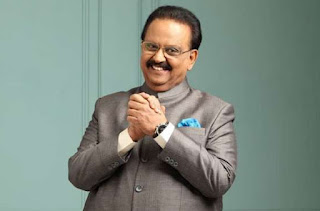
SPB : His Musical History : Links to all 19 parts

Image
Part 1: Background - A legend called Gantasala  Part 2: Initial years of struggle Part 3: Baby steps in Tamil land   Part 4: Climbing to numero uno spot in Telugu    Part 5: Tryst with classical music     Part 6: SPB & Raja        Part 7: Non-Raja Tamil songs of the late 70s      Part 8:   SPB, Chiranjeevi and early 80s Telugu film music      Part 9: Illayararaja - Vishwanath - SPB         Part 10: Illayaraja - Vamsi - SPB            Part 11: SPB in Hindi films       Part 12: SPB- Raja - Tamil film music 80s - 1       Part 13: SPB- Raja - Tamil film music 80s - 2      Part 14: SPB- Raja - Tamil film music 80s - 3        Part 15: SPB's domination down south    Part 16: Dominance in Kannada        Part 17: Emergence of Rahman and the Cha...

Lata Manageshkar - The Queen : Series Links

Image
Here are the links to all parts of the 'Lata Mangeshkar - The Queen' series  Lata Mangeshkar - The Queen : A brief prelude Part 1: Milieu of the 40s Part 2: Start of partnerships  Part 3: Lata - Anil Biswas  Part 4: Lata - Naushad Part 5: Years of consolidation - early 50s Part 6: Lata - Sajjad Hussain Part 7: Lata - C Ramachandra Part 8: Lata - Shankar Jaikishen Part 9: Late 50s Part 10: Early 60s - Undisputed queen Part 11: Lata - S D Burman Part 12: Lata - Madanmohan - Part 1 Part 13: Lata - Madanmohan - Part 2 Part 14: Lata - Salil Chaudhary  Part 15: Lata - Roshan and late 60s Part 16: Lata - Changing landscape of the 70s Part 17: Lata - Pancham (R D Burman) Part 18: Lata - 1980s and 90s Part 19: Lata - Mukesh Part 20: Lata - Rafi  Part 21 : Lata - Kishore Part 22: Conclusion - Lata's legacy

Lata Mangeshkar - The Queen : Part 22: Her Legacy

Image
Here is the link to read all parts of this series. In this last part, let us look at Lata's legacy. Lata came into Hindi film music when modernity was creeping into it, and music directors like Ghulam Haider, Anil Biswas, Sajjad Hussain, Shankar Jaikishen and others were pushing the boundaries of Hindi film music. It must be said that she became an integral part of this push towards modernity. The range of her voice and her singing skills enabled music directors to compose music without fear, for they know Lata would give perfect expression to their musical ideas. She was sought after by every music director in the initial days, though later, O.P. Nayyar did not work with her. She was an integral part of the golden generation of Hindi film music that spanned more than two decades, from the late 40s to the late 60s.  Lata has left behind an amazing body of work, that would be extremely difficult for any current-day singer to match. This is due to two reasons: one, music directors ar...

Lata Mangeshkar - The Queen : Part 21 - Lata & Kishore

Image
Here is the link to read all parts of this series. Kishore Kumar had tremendous respect for Lata and used to call her Lata Didi. They knew each other from the late 40s, having sung together for Kemchand Prakash and Anil Biswas in the late 40s and early 50s. The story of their meeting is funny, and Lata had narrated it in many places. Kishore's trajectory as a singer was quite different from Lata's, even though he had been singing since 1940s. Initially, Kishore Kumar wanted to be an actor. Most music directors of those times saw him as Ashok Kumar's younger brother who wanted to act, and not many saw him as a singer. His lack of formal training in Hindustani classical music was seen as a handicap, and through the 1950s and most part of the 1960s, he ended up singing only for the films he acted in and the films of Dev Anand.  Dada Burman and Dev Anand had a lot of confidence in Kishore's abilities as a singer, but most other music directors preferred Rafi. Also, during t...